Text: Asphodelus • Illustrations: Laura Karino
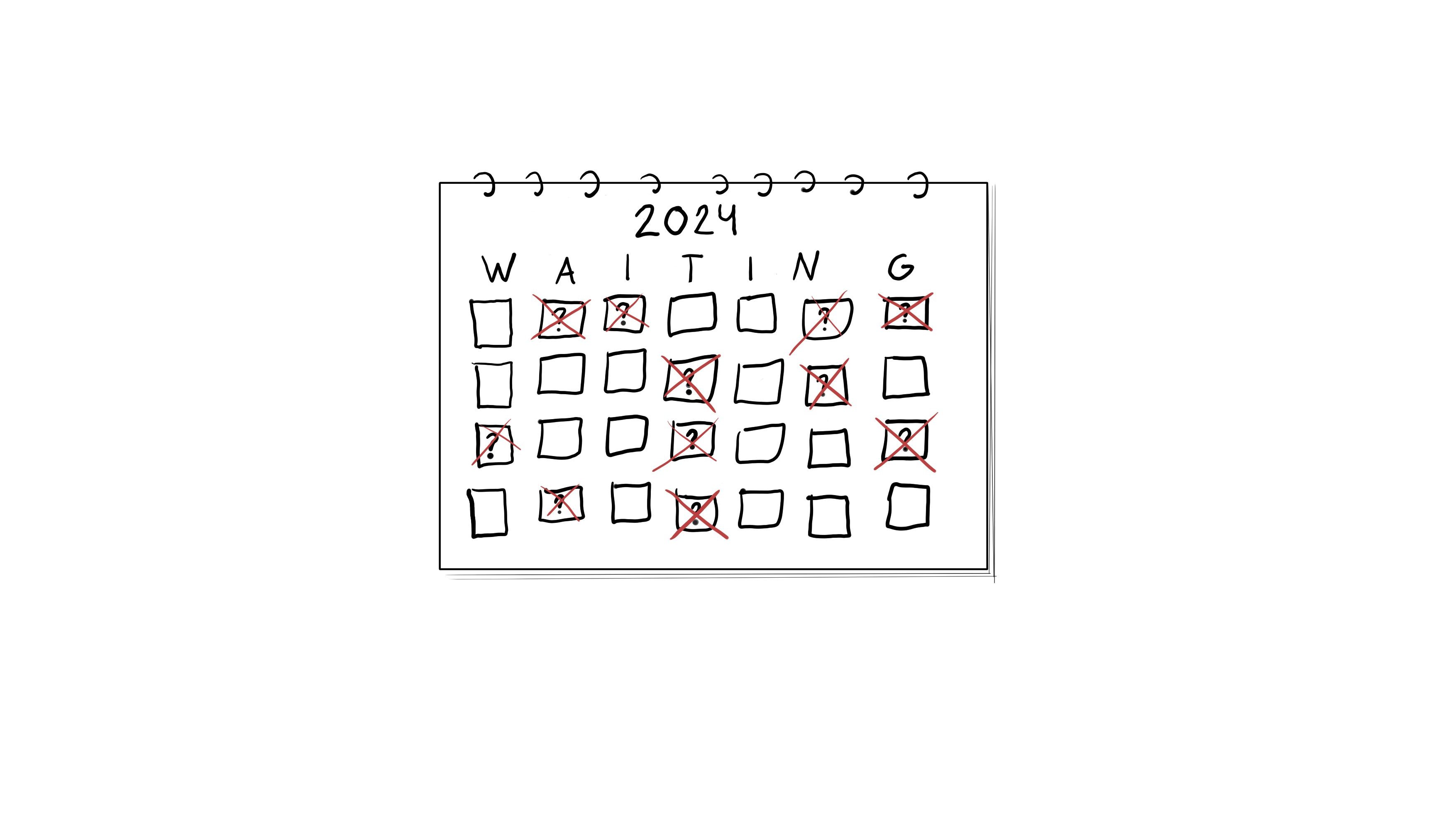
August 2023. My referral arrives at the clinic. I begin my wait.
Waiting for healthcare has become a common topic of discussion with my friends. It’s such a boring, adult thing to spend our spare moments conversing about, especially given how rarely we nowadays get to see one another. We have, after all, begun leading very different lives, since the days of our childhoods. Yet the topic has come to dominate our chats. Waiting for healthcare has become the thing that ties us together, as we face the new phases in our lives – and with regards to our changing bodies lost in the midst of it all.
Much of my life has been shadowed by waiting. Waiting for my own pain to be addressed, for my father’s deteriorating health to be taken seriously, or for my friends to finally be admitted to see a psychiatrist. Even now, as I am writing this essay – and likely by the point you come to read this – I lie in wait for my next appointments. There’s so many of them, all of them scheduled – or expected to be scheduled, as is often the case – so far into the future that I hold no doubts about the truth of that statement.
October 2023. I’ve met with a social worker. My care has not begun. I wait.
Yet the wait I face goes beyond the waitlists themselves. As many stories as I could tell you about the years upon years of actual waiting I have had to face – during which I have had to live much of my teenaged and adult life – there is an equal amount of time lost to the fight to be heard and taken seriously.
Will they listen to me this time? It’s a question I find myself repeating before most of my appointments. It is not only the endless waitlists that have put me on edge and held me back from receiving care. Rather, much of the wait I have had to face has been imposed upon me by the healthcare professionals who do not take me at my word when I do get to see them. As aware as I have had to become of my own body and experiences, the ability to convey what I feel to be wrong with me counts for very little in a system which prioritizes the assessment of an outsider over my own. I appear, after all, much too young and able to worry about the things that plague me. Simultaneously, I may be judged too disabled to receive care on another front.
December 2023. I meet a mental health worker. It is not a part of my care. I wait.
The point of seeking healthcare is to receive help and care. It, however, often ends up being a double-edged sword. For as much help as the field may provide, it can, at the same time, be what ends up hurting the individual. Physical harm from mishandling of cases, the deterioration of health due to the hopeless wait times, and the psychological stress put on by the processes within the system all harm individuals. The institution of healthcare causes harm in ways which the professionals embedded in it are not capable of addressing – be it from an overinflated sense of ego, or, as is more often the case, due to the lack of time and resources at their disposal.
May 2024. I am to be directed to a specialist. Perhaps before New Years. I wait.
Will I ever get to move on? Is there even a time after all of this?
The truth is, there will be no ‘after’ – my body will not change in the manners that would allow for that to be true. It is a simple fact that I must build my life and my plans for the future around healthcare and the fight for it. As much as I feel stifled by the constant need – and the subsequent never-ending queueing – for healthcare, I simply cannot live life tied down by the expectation that after the wait I will receive my salvation. No appointment or diagnosis has ever been that before – what would make the next one any different?
Instead, in between my appointments and the let-downs they often end up being, is the empty space I get to call life. It’s the time I use to go to university, to meet with my friends and visit my family. It’s the time in which I get to define myself, outside the limits put on me as a patient within the healthcare system. It is the time in-between which all at once fills me with hope and despair. For it is in those empty periods, when I wait and I wait and I wait for care, that both the highs and the lows of my life happen.
August 2024. I wait.
Yet as much as I try to live my life on the outside, the waitlists and call-backs from the healthcare system expect me to be at their beck-and-call, lest I want to let the wait stretch on ever-longer. The wait for healthcare demands that it is the only thing in my life, that there be nothing as important – or heavens forbid, more important – in my life than the care I seek. It is expected that I mould my life around the wait for care, for everything else I do to be something I can forsake at the drop of a hat if the system so demands.
Healthcare demands I be a patient first and a person second.
September 2024. I wait.
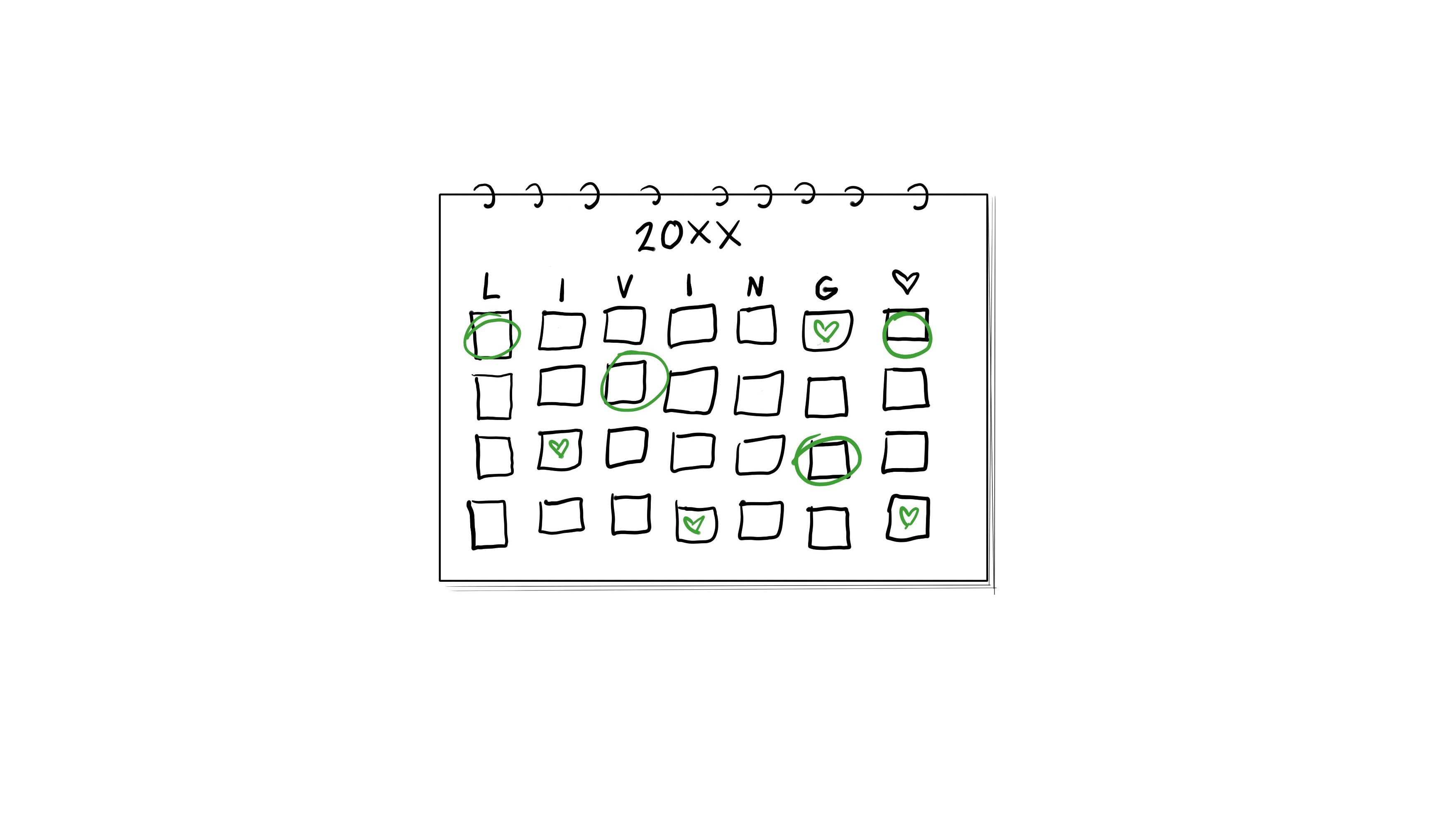
In my dreams, there are no endless queues for nor uncertain promises of future care. It’s a future in which I do not have to worry about when a call-back may come, where I get to trust my healthcare provider to listen to what I say, and where I do not have to dread the eventuality of being turned away. It is a dream I dare not speak much out loud, for I fear the act of openly wishing for it, may be the thing that dooms it. Yet I believe it important to stay hopeful for the future, lest the bleakness of reality wear me down. Even as the fight seems never-ending and the future of my care as evasive as ever before, I find hope in the small things.
Listening to an older acquaintance tell me about getting their diagnosis in their forties – for something much akin to what I struggle with nowadays – fills me with hope for a future in which I am listened to. The enthusiasm of the project leads at the Institute for Health and Welfare reassure me that maybe, one day years from now, the care provided to queer youth will be better than in my time. My friends’ small victories, the positive interactions I have with the healthcare staff at the various clinics, and the occasional times I truly feel listened to by a doctor, they all help me move forward as I wait for my next appointment.
I also find solace in literature. In the disabled folk who write about crip time and their experiences in healthcare. I find companionship in the queer folks who share their transition journeys and fights for reproductive care, and in the fat folks who are working to change our definitions of what ‘being healthy’ looks like. In the journeys of others, I find the willpower I need to keep on advocating for myself and my peers, in a system which fails so many.
A month, 20XX. My wait is over. I finally get to move forward.
Suggested reading: Six Ways of Looking at Crip Time by Ellen Samuels; Feminist, Queer, Crip by Alison Kafer; Weight Stigma Kept Me Out Of Doctors’ Offices for Almost a Decade by Aubrey Gordon; and, more importantly, the writers I have yet to find.
 Policy